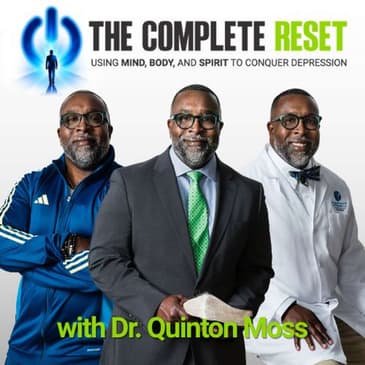
Welcome back to The Complete Reset! In today’s episode, Dr. Quinton Moss to tackles one of the most misunderstood and stigmatized topics in healthcare, substance use disorder. Together, they break down the science behind addiction, exploring how it isn’t a moral failing or a lack of willpower, but truly a chronic condition rooted in the brain’s chemistry and wiring.
You’ll hear Dr. Quinton Moss explain how substances hijack the brain’s reward system, why decision-making changes so drastically for those affected, and the powerful connections between substance use and co-occurring mental health challenges like depression, anxiety, and trauma. They’ll also dive into how treatment and recovery have evolved over the past decade, why comprehensive care, not just detox is essential, and what innovative, integrated programs look like today.
Whether you’re personally impacted, know someone who is, or simply want to better understand the realities of addiction and recovery, this episode offers a compassionate, science-based perspective you won’t want to miss. Be sure to listen, share, and help us continue breaking the stigma around substance use disorder.
00:00 "Substances, Brain Reward, and Dopamine"
05:01 "Addiction: A Brain Rewiring Loop"
08:59 Co-occurring Disorders and Treatment Challenges
13:02 Substance Use Impairs Decision-Making
14:26 Stress, Substance Use, Brain Wiring
20:09 Substance Potency and Overdose Risks
24:29 Opioid Epidemic and Prescription Risks
26:04 "Factors Increasing Substance Use Risk"
30:54 Methamphetamine: Dopamine's Unfair Player
34:10 "Holistic Patient-Centered Care Approach"
36:43 Holistic, Personalized Recovery Approach
39:03 Structured and Peer-Based Recovery
44:46 "Relapse: Part of Recovery Journey"
48:18 Comprehensive On-Site Care Solutions
50:30 Faith-Based Mentoring and Support
52:42 "Addiction: Compassion and Care"
Understanding Substance Use Disorder - Breaking the Stigma with The Complete Reset
In one of the most insightful episodes of The Complete Reset, host and psychiatrist Dr. Quinton Moss to unravel the complex reality of addiction, a subject still wrapped in stigma and misunderstanding. Their conversation peeled back the layers on what substance use disorder (SUD) truly is, why it’s so deeply entangled with mental health, and how modern recovery looks very different from outdated approaches.
Addiction: Not a Moral Failing, but a Brain Illness
One of the strongest messages from this episode is that addiction is not about weak willpower or flawed character. Dr. Quinton Moss urged us to rethink old notions, emphasizing that SUD is a chronic medical condition, specifically, a brain illness. “This is, unfortunately, how the brain responds to getting a certain substance or chemical,” he explained. Unlike behaviors we simply choose, substances like alcohol, opioids, and meth can hijack our brain's reward systems, creating a compulsive drive that rewires how we make decisions.
Dopamine, the “feel-good” brain chemical, is at the heart of this process. Dr. Quinton Moss described how substances cause a flood of dopamine, much stronger than anything our natural pleasures could provide. This surge doesn’t just create temporary happiness, it reroutes our priorities, driving individuals to seek the substance above work, relationships, and even caring for children. The myth that people “could just stop if they tried” falls apart when we understand that addiction changes the very circuits responsible for making good decisions.
The Overlap with Mental Health
Addiction rarely exists in a vacuum. Layla and Dr. Quinton Moss dug into the frequent overlap between SUD and conditions like depression, anxiety, bipolar disorder, and PTSD. Studies suggest that 40-60% of people seeking treatment for SUD also have another mental health condition, but in practice, Dr. Quinton Moss sees closer to 90%. Sometimes the mental health challenge precedes substance use and drives people to self-medicate. Other times, the hardships and trauma of addiction create depression and anxiety.
Here’s why this matters: treating only the substance use and ignoring the mental health piece sets people up to fail. Old-school programs might help someone detox, but if they’re still battling untreated depression or trauma, their chance of relapse skyrockets. Today’s best practices focus on integrated care, addressing addiction and mental health together from day one.
Modern Addiction: Potency, Risk Factors, and New Challenges
Addiction looks different today than it did 20, or even 10, years ago. Dr. Quinton Moss chronicled powerful shifts: prescription pain pills (like OxyContin and Vicodin) once dominated, then heroin, and now fentanyl, a synthetic opioid many times more potent and deadly. Methamphetamine’s potency has also skyrocketed, and even cannabis has become far stronger. Not only have the substances become more powerful, but they’re also frequently mixed, sometimes with lethal results.
Another crucial point was the role of risk factors. A family history of addiction, growing up in an environment where substance use is normalized, and early-life trauma can all significantly increase one’s odds of developing SUD. These aren’t just lifestyle issues; early trauma can alter the brain’s development, weakening natural stress response and reward systems.
What Recovery Really Looks Like
Forget the one-size-fits-all view of “going to rehab.” Dr. Quinton Moss described modern treatment as comprehensive and deeply personalized. Effective programs assess the whole person, mental health, medical needs, environment, support systems and may include detox, medication (such as MAT for opioid use disorder), individual and group therapy, medical care, housing, job training, and, when appropriate, spiritual support. Relapse is not failure; it’s a hurdle in the long journey of managing a chronic illness.
Programs like the Genesis Program, highlighted in the episode, combine all these elements, offering hope and a new start.
The Big Takeaway
Addiction is a medical condition deeply linked to mental health, brain changes, and life circumstances,not a personal shortcoming. Recovery is possible and likely, especially when stigma gives way to empathy, knowledge, and whole-person care. If you or someone you love is struggling, remember: seeking help is an act of courage, and comprehensive support can truly change lives.
Stay tuned to The Complete Reset for more conversations breaking down mental health myths and lighting the way forward.
Podcast's Website - https://thecompleteresetpodcast.com/
Dr. Quinton Moss - https://thecompleteresetpodcast.com/about
Dr. Quinton Moss' Clinic - https://mpwhealth.com/
Dr. Quinton Moss LinkedIn - https://www.linkedin.com/in/quinton-moss-md-86a336149/
Podcast Partner - https://tophealth.care/